
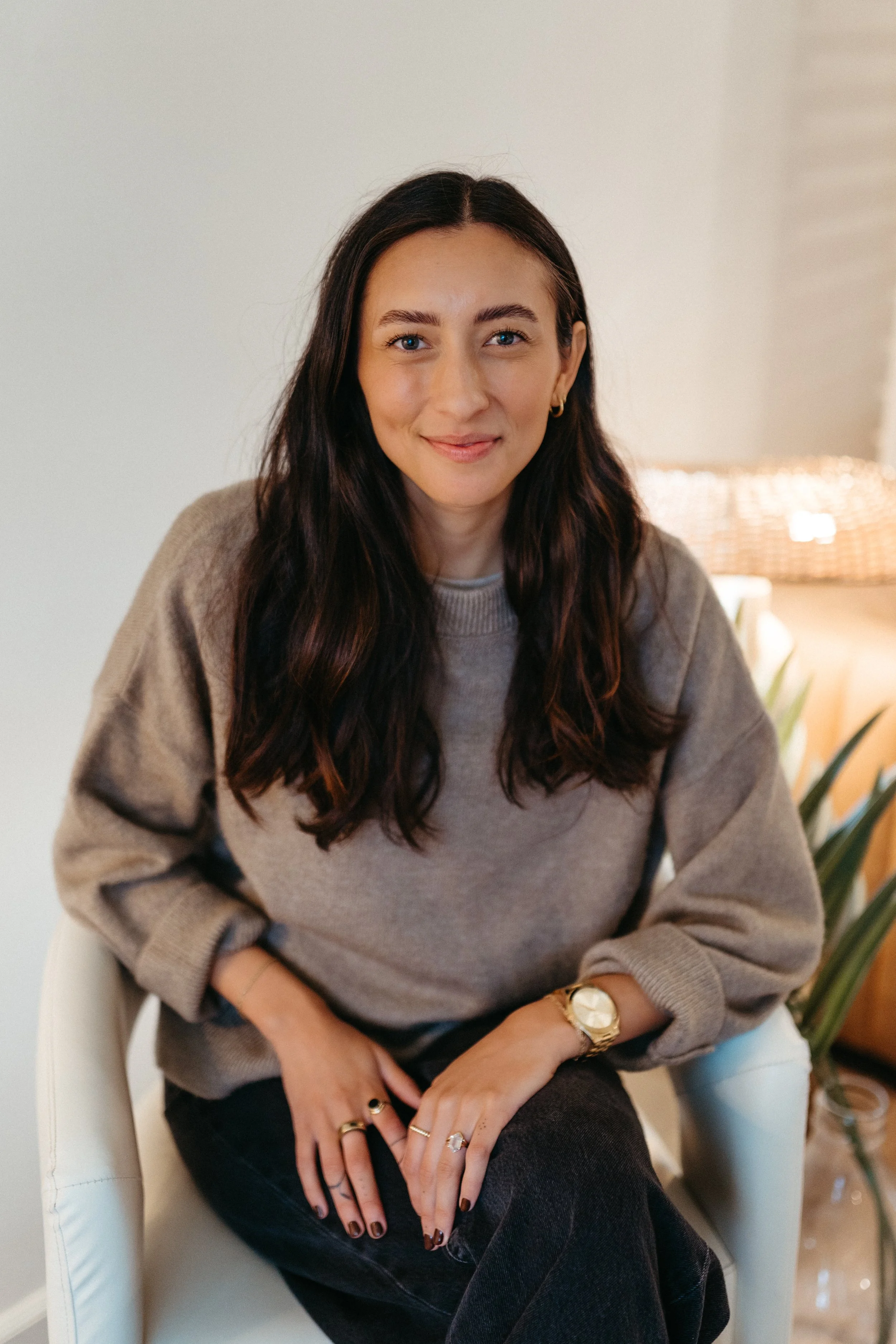
Founder and Owner of Nido Individual & Family Therapy
Licensed Therapist & Supervisor
Sarah Finch, M.A. LMFT
(she/they)
Mental health care for all
I created Nido with the knowledge that it is far more than just a therapy practice. Nido is a reclamation of ancestral voices and a commitment to break cycles of trauma. It is a space that honors the collective, intergenerational wisdom of those who came before us — a space where healing is not reserved for the privileged few, but is accessible to all.
At the same time, creating Nido is healing me and my future generations. Every step I take in nurturing Nido is a step toward healing my own wounds and creating a legacy of resilience by confronting and transforming the pain of my lineage, liberating myself from patterns of trauma that have spanned decades.
Each person who comes through Nido’s doors has the opportunity to do the same, transforming personal healing into collective liberation that ripples outward. We have the power to transform communities, inspiring a shift from isolation and oppression to connection and true care.
In essence, Nido is both my sanctuary and my battleground: a place where I reclaim my history, heal my heart, and plant the seeds of hope for future generations. As each life is touched and each story is honored, we collectively change the world, one healing journey at a time.
The following letter from Sarah shares her inspiration for creating Nido. The writing is ultimately hopeful , but please take care in reading. This section contains mentions of poverty, multiple forms of abuse, addiction, and suicidality.
-
“The desire to create Nido Individual & Family Therapy has flourished over the past decade since walking my own path towards healing and becoming a healer myself. But it has also been generations in the making.
I am a daughter of a second generation Colombian woman and a granddaughter of immigrants from Colombia, South America. My grandparents were both raised by single mothers living in poverty. My grandmother was used as a criada (a house servant) from a very young age. She only attended school until 5th grade, and could barely afford one meal a day.
My grandparents immigrated to the U.S. as young adults and soon after had four children. It is known (but not talked about) that my grandparents experienced trauma after trauma throughout their lives in Colombia and in the process of moving to the U.S. However, because they were ostracized for their unfamiliar language and dark faces, they were neglected by the dominant culture in the United States.
My grandparents never considered therapy, as it was believed to solely be for those who had the resources: the white and the wealthy. Compounded by this belief, therapy was stigmatized — admitting that something might have been wrong or that help was needed would have induced shame.
The many barriers to their own healing, like their lack of education regarding mental health, willingness, financial means, and available resources, further perpetuated harm and caused severe trauma for their own four children. Physical beatings, sibling sexual abuse, and religious control poisoned their home. Their children developed C-PTSD, anxiety, depression, drug addictions, and eating disorders. In desperation for help, my own mother attempted suicide at age 15. Her need for psychological help, despite her insistence and willingness, was not met, which perpetuated harm again for the next generation of children.
My mother, having survived the trauma she had endured, suffered a great deal into her adulthood. Those years consisted of an unplanned pregnancy at age 23 and more abusive partnerships.
Inevitably, these circumstances exposed me to an array of traumatic and abusive environments. At the hands of one of my mother’s partners, I became a victim of child torture and faced many years of aggravated abuse and inhumane disciplinary punishments. These experiences deeply impacted my development and the ways I interacted with myself and the world around me, creating survival strategies and coping mechanisms I eventually had to find the courage to process in my own therapy years later.
Simultaneously, my father’s family was marked by generations of alcoholism and numerous forms of emotional and physical abuse. My alcoholic grandfather did not get the support he needed, which resulted in him abusing his children, including his oldest son, my father. Therapy wasn’t utilized for my father to recover from his childhood and he, too, learned unhealthy ways of relating to others in his early adult years.
When we don’t heal from our traumatic experiences, we are more vulnerable to perpetuate harm in the similar ways that we were victims to it.
I share parts of my own personal story and the generations before me to show: if my grandparents would have received the mental health support they needed, their lives, my parents lives, and my own would be astronomically different.
This is one example of why psychotherapy needs to be more accessible to all — to get the care and support we need to heal from our trauma and to end patterns of abuse and harm.
At age 15, I initiated therapy for myself without the consent of my parents and began my healing journey. Since then, I have continued therapy, healing from my past and breaking generational patterns for my future.
Now, as a therapist, myself, I work with countless clients whose grandparents and parents could not afford support or were misinformed about psychotherapy and unintentionally hurt their children in the same ways that they were hurt.
Creating Nido is my ancestral cry — it is a living, breathing response to the silence and neglect that haunted my family for generations, and it exists to breaks the cycle not just for me but for all of us. Every person who comes to Nido has the capacity to create new cycles of care, and that care extends to everyone in their lives.
My clients are cycle breakers.
This is why Nido Individual & Family Therapy is so important to me.”
Support the cycle breakers.
Supportive care is an essential step toward breaking generation trauma, changing, shaping, and healing our lives and the world around us.
About Sarah

Sarah is a Licensed Marriage & Family Therapist and the founder of our psychotherapy practice, where she is a compassionate and attentive companion on the journey of discovery, self-acceptance and growth in all that she does.
Driven by a profound curiosity about the human experience and a sincere sense of compassion, Sarah is dedicated to walking alongside individuals, families, groups and couples through the various chapters of life.
With a rich background encompassing 10+ years in the field, Sarah brings a wealth of expertise to her practice.
Her approach is rooted in a personal commitment to her own depth therapy, an abundance of education, and formidable life experiences as a Colombian neurodivergent woman. She understands that each person is on a unique journey, working towards healing parts of themselves that may have been mistreated or overlooked.
As both a human and a provider, Sarah radiates a strong passion for healing in ways that prioritizes nonjudgmental exploration, self-acceptance and gentle curiosity. She firmly believes in the transformative power of restorative relationships, emphasizing that everyone possesses the ability to rewrite unhelpful life narratives and discover the strength to shape their own future.
Through compassionate exploration and respect for the ways you’ve survived life so far, she helps clients work through difficult emotions, unmet needs, and internal conflicts, so you can experience growth, acceptance, and lasting change. Her approach centers on creating a trusting relationship where you are prioritized and honored.
She will celebrate your uniqueness and stand alongside you for the injustices that you've faced and the times you've been silenced. She helps clients to build insight into the emotions and conflicts beneath the difficult symptoms, in order to gain an expanded understanding of yourself and reclaim your life.
After years in the making, Sarah started Nido Individual and Family Therapy in 2023 in hopes of building a practice that is relentless in its mission to provide attentive, quality, accessible mental health care to all people. Rooting her practice in inclusive, enlightened, holistic, and emotionally-safe care, she believes in a future where clients can receive accessible, high quality care and where clinicians are paid a living wage.
With Sarah's nurturing approach, extensive clinical experience, and personal commitment to self-exploration, you can trust that you are in caring and capable hands.
When not wearing the many hats of a practice owner and therapist, Sarah loves cozying up with her two giant goldendoodles, writing, and spending time in the sunshine.
Sarah has unique experience working with:
• Trauma
• Neurodivergent Folks
• Depression
• Suicidal Ideation/Self Harm
• C-PTSD/Torture Survivors
• Dissociation & Disconnection
• LGBTQIA2-S+ Folks
• Grief/Loss
• Discrimination
• Multiracial/Mixed-Identity
• Historical/Intergenerational Trauma
• Family/Partner Conflict
• ADHD & Autism Testing
• Clinical Consulting & Business Mentorship
Sarah’s approach when working with clients:
• Trauma Informed
• Psychodynamic/Psychoanalytic
• Emotionally Focused (EFT)
• Body-Centered Somatic and Body Size Inclusive
• Neurodivergent/LGBTQIA2-S+ Affirming
• Culturally Humble/Sensitive
• Compassionate
• Collaborative/Relational
• Attachment-Based
Licensed in the state of California for in-person and telehealth sessions in Manhattan Beach and Costa Mesa. Sarah is also licensed to work with clients virtually who reside in Utah and Florida.
Want to work with Sarah?
You can expect a response from us within two business days.